
Healing That Works With Your Body
Supporting Recovery From the Inside Out
Some treatments benefit from a little extra support during healing. PRP and PRF use components from your own blood to help encourage the body’s natural repair process after periodontal procedures, especially when gum or bone tissue needs added support.
Dr. Malloy and Dr. Ferrin use these therapies to support tissue response after treatment and help your recovery feel more steady and supported.
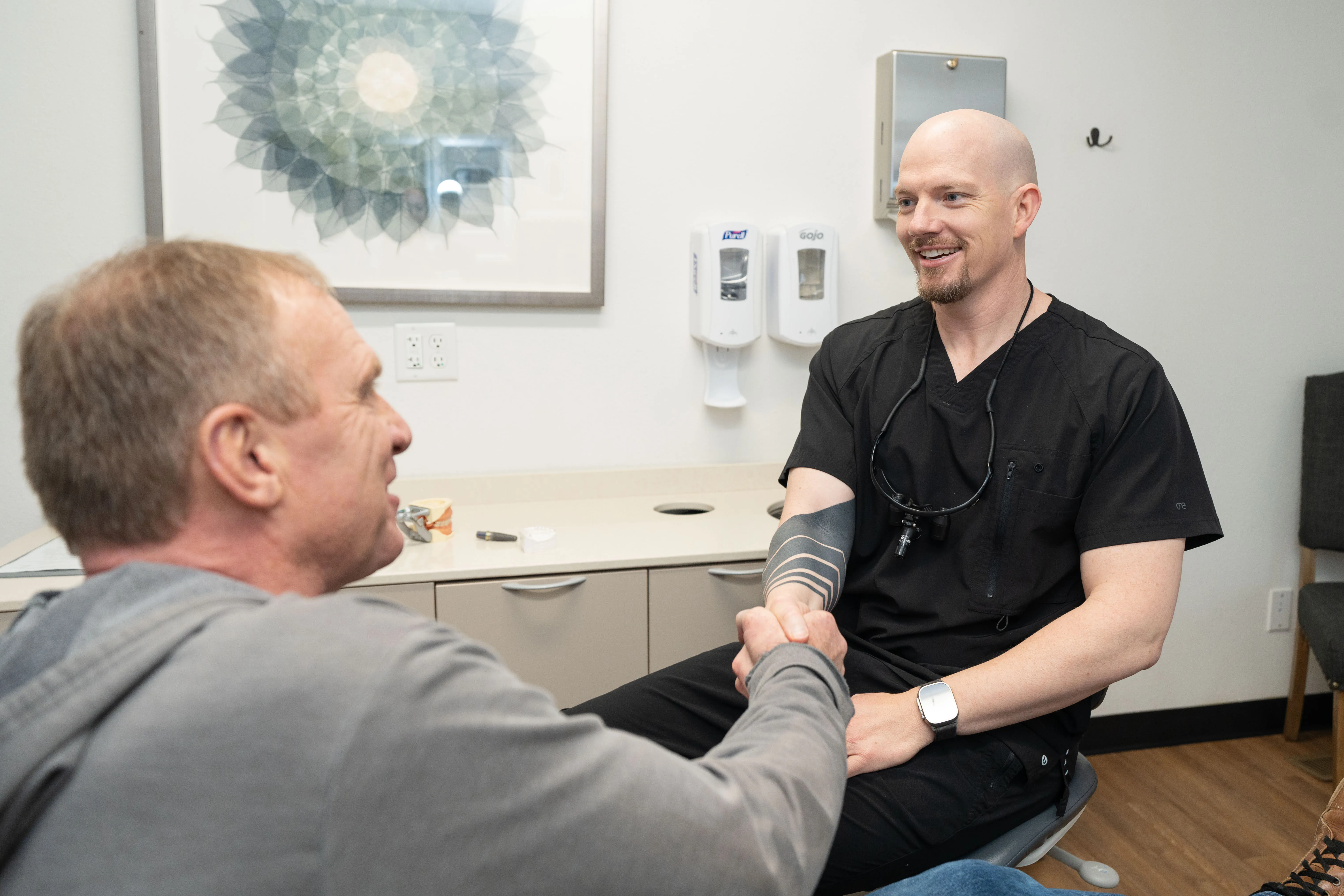
The Impact on Your Recovery
Supporting the Body’s Natural Repair
These therapies work with your body’s own healing process. By using your own biological material, the treatment is designed to support how your tissues naturally respond after periodontal care.
Encouraging More Comfortable Recovery
Many patients appreciate that recovery feels more manageable when PRP or PRF is part of their treatment plan. It supports healing in a way that helps reduce irritation as the area begins to repair.
Helping Bone and Gum Stability
In cases involving gum or bone loss, these therapies are often used to support regeneration. Dr. Malloy and Dr. Ferrin may recommend them when stronger healing support can improve long-term outcomes.
Supporting Graft Procedures
When grafting is needed, PRP or PRF can be used to help the tissue integrate more effectively. This added support can contribute to a more predictable healing process.
.webp)
Using What Your Body Already Knows
PRP and PRF are regenerative therapies that use a small portion of your own blood to concentrate the natural elements your body already relies on to heal. What makes them interesting is not that something new is added, but that your body’s own healing signals are gathered and placed exactly where they are needed most.
These therapies are often used because different types of healing happen at different speeds. Some support an early healing response, while others provide a longer-lasting structure for tissue repair. Dr. Malloy and Dr. Ferrin may recommend one or both depending on what your gums and bone need to recover in a more supported way after treatment.
How Treatment Comes Together
Step 1: A Small Blood Sample Taken
A small amount of blood is collected during your appointment. This step is quick and handled just like a routine lab draw.
Step 2: Concentration of Healing Factors
The sample is processed in a centrifuge to separate and concentrate the components responsible for healing. This creates the PRP or PRF used in your treatment.
Step 3: Application During Treatment
Once prepared, it is placed directly in the treatment area by Dr. Malloy or Dr. Ferrin. This allows the healing factors to support recovery exactly where they are needed.
A Relationship-Driven Approach
In this short video, Dr. Ferrin explains a belief shared by both him and Dr. Malloy, that every patient should feel cared for like family from the moment they walk in. He shares how they see oral health as the foundation of overall health, and how meaningful care comes from balancing what your mouth needs with what matters most to you.
Frequently Asked Questions
What does PRP and PRF do?
PRP and PRF help support the body’s natural healing process after periodontal treatment. They are used to encourage tissue repair, support gum and bone healing, and improve how the body responds during recovery.
Are PRP and PRF the same?
They are similar because both come from your own blood and support healing, but they are not identical. Each one releases healing factors in a slightly different way, which is why Dr. Malloy and Dr. Ferrin may choose one or both depending on your needs.
What does PRP and PRF stand for?
PRP stands for Platelet-Rich Plasma. PRF stands for Platelet-Rich Fibrin. Both refer to concentrated forms of components found in your blood that play a role in healing.
What is the difference between PRP and PRF treatments?
PRP releases growth factors more quickly, while PRF forms a more structured matrix that releases healing support over a longer period. The choice depends on the type of periodontal procedure and what kind of healing support is most beneficial for your case.
Is PRP or PRF safe?
Yes. Because both treatments come from your own blood, they are generally well-tolerated and considered safe when used in dental procedures. They are processed in a controlled clinical setting by our dental team.
Does PRP or PRF replace periodontal treatment?
No. These therapies are not a replacement for periodontal treatment. Instead, they are used alongside treatment when appropriate to support the body’s natural healing response.
Why would my dentist recommend PRP or PRF?
Dr. Malloy and Dr. Ferrin may recommend PRP or PRF when added support could improve healing after gum or bone treatment. It’s always considered based on your specific condition and treatment plan.
A More Supported Experience
PRP and PRF are not required for every case, but when appropriate, they can help support how your gums and bone respond after treatment. Dr. Malloy and Dr. Ferrin will walk you through whether this approach makes sense for your specific needs and what role it may play in your care plan.

